
Before you begin to design a resilient lubrication strategy, you need to know where your current lubrication strategy falls as per industry standards. You can review part 1 in this series where we break down the various levels of maturity for lubrication programs. Afterwards, determine your hidden failure modes which you can read about in part 2 of our series.
As a quick refresher, here are the various maturity levels for lubrication programs.
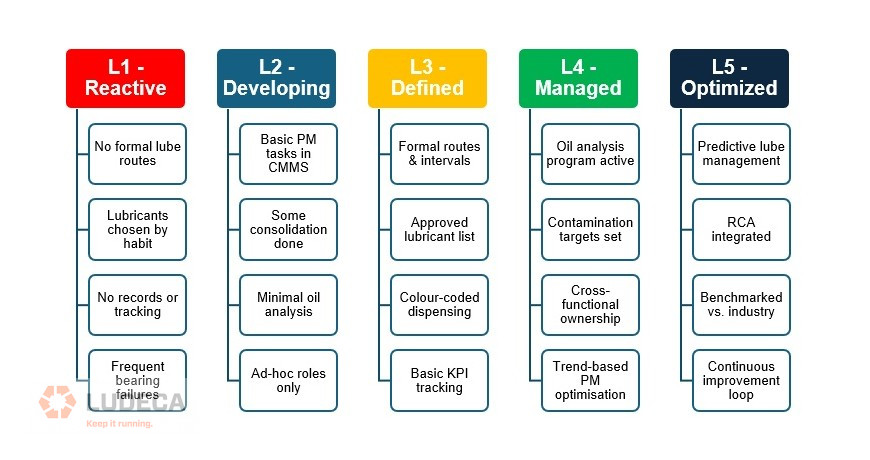
Once the current lubrication program level is identified, we then need to audit the systems that we have in place to understand what gaps need to be filled. While wanting to achieve level 5 is always the goal, we also must be cognizant of our constraints. Within our industry, some constraints which typically exist include; budget, manpower, resources and time. Each of these have crucial roles to play in determining the success of our lubrication program.
Closing the gaps
Once your gaps have been identified, this is not the end of the story. We need to put procedures and strategies in place to make sure that we can close these gaps. This is where we get to re-evaluate work orders, ensure that they are now being aligned with our condition monitoring programs and design our systems to have proper lube routes as well as frequencies or relubrication with the correct lubricant.
After auditing our condition monitoring program (which forms part of the lubrication program), we should also assign dedicated personnel for interpretation of oil analysis results as well as sampling. Being able to access consistent data and trending will help us to understand our equipment better and possibly detect failures before they occur.
Part of auditing of condition monitoring program includes setting up alarm limits within our system which are aligned to our equipment and environment. While the lab will have the standard set of alarms, we should take a closer look at what really resonates with our equipment. For instance, if we start seeing a spike in copper right after a turnaround where certain parts were changed, then this may be normal and just break in wear. However, the lab may flag it as a component failing (if we did not provide them with adequate details).
Contamination
One of the biggest sources of failures for our equipment is contamination. By designing our lubrication program to eliminate sources of contamination (within or control), we can essentially minimize equipment failure. Most contamination can happen during oil transfer to equipment where the oil may either be placed in dirty containers, or have contaminants enter their packaging from improper storage conditions.
By designing our lubrication program to address contamination and have measured results as goals for our program, we can improve our systems. Without clear cleanliness targets we cannot evaluate the impact of reducing contamination. Desiccant breathers and proper sealing techniques can also help in reducing the ingress of contaminants into the system.
Training and Accountability
Designing a lubrication program must also include the training of the employees to execute the program. They are the ones responsible for its success and if not trained or briefed about the importance of their assigned roles, then they will not bring the value to the program and unfortunately, it will fail.
By allocating responsibilities to employees and having them accountable for these roles it brings some form of ownership into the program. This allows the program to thrive more as they are genuinely invested in making it a success. Once they have been trained, they can in turn continue to spread the word about lubrication and best practices to their peers.
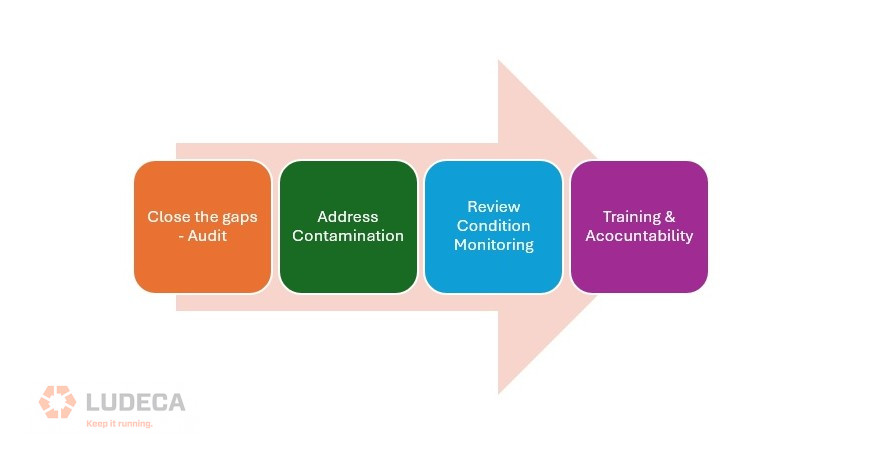
Essentially, we can have hidden failures in our lubrication programs, but we can uncover these and redesign our program to become a success through auditing and putting proper strategies in place. Next time you think about your lubrication program, explore its robustness and think about ways in which you can improve it to ensure that it is adding to the value that it should.
Download our 5-Step Acoustic Lubrication Procedure for an effective lubrication procedure to grease bearings right.
Thank you Sanya Mathura with Strategic Reliability Solutions Ltd for sharing this informative and educational series article with us!
Filed under:
Lubrication by Diana Pereda