
One of the problems that we encounter with belt-driven machinery is shortened belt life. Listed below are the most common reasons for shortened belt life and some advice on how to avoid these problems.
- Excessive belt stretch: This is a result of misaligned sheaves, a broken tensile member in one belt, or a significantly overloaded drive. Using a precision laser belt alignment tool for aligning the sheaves will eliminate the misalignment problems. Taking the time to properly install the belts by loosening the adjustment and not rolling the belts on under heavy tension will lessen the chances of broken cords in the belt. Proper tension is generally considered to be 1/64″ of deflection (or “give”) per inch of span length when pressed with a spring scale to the belt manufacturer’s recommended amount of force.
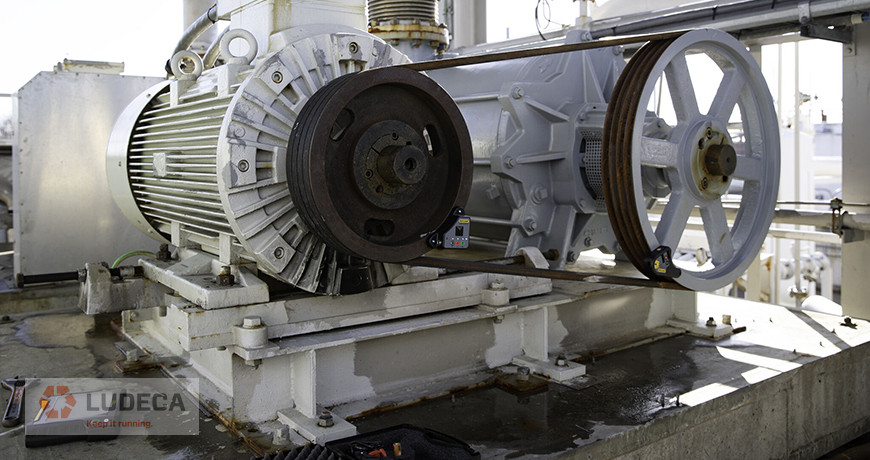
- Worn sheave grooves: For V-belt sheaves inspect the grooves for wear and nicks. Place the proper sheave gauge into the sheave groove and check for wear. If more than 1/32″ of wear can be seen between the gauge and groove side wall, the sheaves are worn and should be replaced. Do not be misled by “shiny” grooves. Grooves that are shiny are often polished because of heavy wear. Inspect the sheave grooves for rust or pitting. If either is found, then replace the sheave. For Synchronous sprockets — Inspect sprocket grooves for unusual or excessive wear. Check for excessive wear by both visually inspecting the grooves and by running your finger along the sprocket groove (using proper PPE to avoid injuries). If you can see or feel noticeable wear, replace the sprocket.
- Oil or grease on belts make the belt side-walls sticky or swell the belt’s cross-section: Use proper guarding to protect the belt and sheaves as well as avoid over lubricating machinery.
- Belts rubbing against guards and frames: Ensure that the guards are fabricated to the correct dimensions to avoid rubbing. You should also inspect the guards for damage.
- Incorrect sheave size: Sheaves that are too small may cause the bottom of the belt to crack.
- Dirty and dusty sheave grooves: cause belts to track poorly, whip, and vibrate. Squeaking and chirping noises are usually associated with dirty sheave conditions. Do not apply belt dressing or oil to the belt to eliminate the noise. Instead, address the underlying root cause of the problem.
Download our Pulley Alignment Guide plus 5-Step Procedure for information on the implementation of good pulley alignment of belt-driven equipment including terminology, alignment methods, belt maintenance, storage and tensioning as well as a 5-Step Sheave/Pulley Alignment Procedure.
Filed under:
Alignment by Tom Cummings