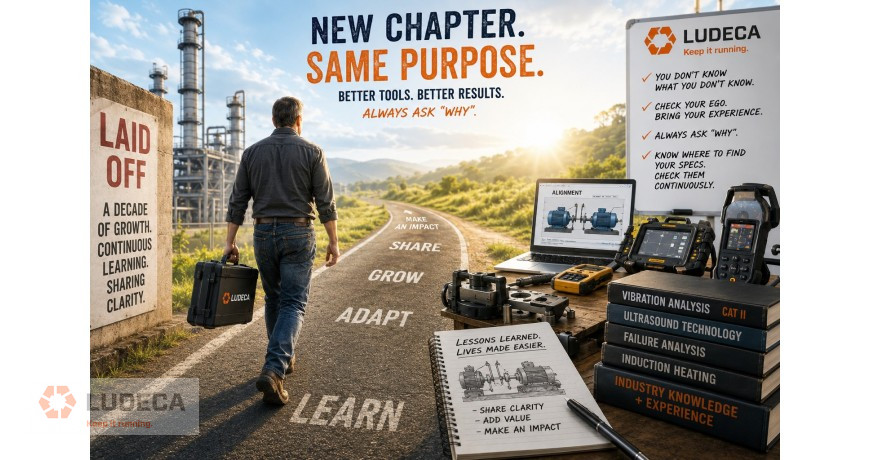
It has been almost exactly a decade since I was laid off from my job in the gas industry. It was an abrupt change to my life, both emotionally and professionally. I knew things were headed downhill with the company where I worked but I thought our department’s value to the company was nationwide, not just the region where we were based. Unfortunately, real estate deals do not see offices in that light. Our building (and the jobs being performed there) were part of a complete market sell-off. I was taken by surprise, but I can’t say I was completely shocked. I was given a severance and insurance benefits, so I had the luxury of waiting a bit for the right job to come along. That doesn’t mean that I was sitting idle. On the contrary, I definitely was on the hunt for another job. It didn’t have to be just any job, but one that I could be secure with and maybe even grow a bit more professionally (well, kind of. If you know me, you know the challenge there).
One of the jobs that popped up was as part of the training group with Ludeca. I knew about Ludeca from the past, since we had bought laser alignment kits from them in the past. They knew me from the department I had been part of, and what kind of curriculum we used for corporate training and industry meetings. We talked about things a lot before either side said “yes”, and I have to admit that I felt a bit of pressure coming into the job. I would be working with not just one industry, but all industries. And I would be working in a group of engineers, not just tradesmen and mechanics. I needed to step my game up BIG TIME if I was going to swim in these waters. Ludeca also works with different technologies than I was used to, so I needed to learn and understand how those tools worked and what kind of applications called for which technologies.
Here are the take-aways from that learning curve and my continued education working with a technology-based company:
-
You don’t know what you don’t know.
I feel like I had a pretty firm grasp on things. I had been a mechanic most of my life. With years of different fields of turning wrenches, I figured I could catch on pretty quickly. WRONG! Some types of work we do require constant practice and learning to stay abreast of what is being done with not only the current crop of tools being used, but also the evolution of those tools as the market evolves as well.
-
Check you ego at the door but bring your experience with you.
Even having a ton of credentials doesn’t make you an expert on anything. They provide you with a basis for evaluation of the facts, and sometimes even clarity you might have been lacking before. I see so many issues from my past life that I would address differently if I had a chance to do it over again. What I know now would have made my life so much easier. For example, we were fighting a vibration issue with a compressor. Based on the advice of someone with no vibration experience, we kept working on the problem as if it was all from a bad alignment. If we knew how to look at the vibration data, we would have focused our energy on the gas flow issues that caused the vibration instead of assuming vibration is only caused by alignment. My goal now is to share that clarity with those who are still doing the tasks I did and maybe make their jobs easier.
-
Always ask “Why”
Knowing the “why” makes it easier to understand the task and the desired outcome for that task. So many techs are told to do something in just such a way and given no real explanation as to why it’s being done that way. Asking “Why” should establish a clear path to completion, and if it does not work out maybe we readdress what is being done to more closely align with the desired results. Doing a task with nothing but “because” does not add value to that task. At that point, it is just checking things off of a list.
Which leads to one of the biggest things that I have learned since working for Ludeca.
-
Know where to find your specifications and check them continuously.
We had so many numbers thrown at us in Gas Compression, and most of them were hand-me-down knowledge from a long time ago. I was aware of this when I was in the field, and I even got a much better understanding of this when I went into training. A lot of that data was corrupted by things like individual experience, or back to the “because we said so” working habits. Sometimes there are changes to a certain product or specifications to get a better result, but if we always adhere to the hearsay, we might never achieve that result. I have grown past the point of memorizing numbers. I work on knowing where to look them up, and I also try to look for the newest data for those specifications in case they have been updated.
There is a ton more I have learned working for Ludeca, which could last for much longer than just a blog. Things like vibration, where I have been able to work my way up to a category 2 certification. It has changed my view on machinery just as much as the Failure Analysis class I had in 2011. Ultrasound tools are something we looked at back in the days of compression, but we didn’t understand how it would work in our loud environment. Now, we have not only the ultrasonic inspection tools to “hear” the issues, but the ultrasonic imagers that let us “see” the noise and the source. The induction heaters we carry would have saved us so many issues with hub installation, and we could have done it at a safer pace than trying to handle a 300 pound part that was just getting hit by four torches at once.
I have come a long way from just talking about that “.005″ for offset and .005″ for angularity” tolerance for compression alignment. And that was all we looked for with our dial indicators. Knowing how much we didn’t know about alignment means that maybe we should have another talk about that “5 and 5” and come up with better tolerances for that kind of equipment. It might just make your life easier, or at least give you some clarity.
Three Things Leaders Can Do to Impact Condition Monitoring and Precision Maintenance Programs
Filed under:
Alignment by Chris Greene CRL